Pages

Sunday, September 04, 2011

Vernacular architecture

Although we live only a few minutes from the coast on the infamous tourist trap of the Costa Del Sol, there is nothing in our village or on our coastal strip that screams of Brits (or anyone else) On Holiday.

Walking around the beach on our usual stroll the other day, I thought I would take a few photos of the local domestic architecture.

There are a few key points to note here:

1) We live in a predominantly agricultural community.

This does not mean that people have huge fincas with acres of olives and all the rest of it - like we all watch on A Place In The Sun.

What it actually means is that most people live in the village and rent ground annually to grow their crops. A few lucky ones, slightly outside the village, have a bit of ground with their houses. These are the houses that most of the pix reflect.

They also invariably happen to be on the main road, not something your average Brit would choose, but it rarely bothers Spaniards.

And of course, in the village, there isn't enough space to have large plots of ground with your house.

2) A lot of the older houses were built out of soft stone from the local quarry. Looks great, incredibly thick walls, and - somewhat porous. Still, it's nice to have a stone house. Dread to think of the cost of that little cute stone cottage in the UK near the coast.

3) Houses when first built tended to have square rooms, maybe - but not always - an entrance hall, and to either side of the front door, a sitting room, and a kitchen, with one or two bedrooms behind. These were the posher houses. Poorer people had two rooms. One to sleep in and one to do everything else in. Cooking happened outside or wherever. Bathrooms didn't happen. Neither did glass windows, or electricity or mains water or.... etc.

There might have been a shady patio outside the bedrooms and/or a corral for the animals. And from this basic houseplan has developed today's village homes.

4) Spanish houses are rarely 'original'.

Spaniards have a positive mania for 'reforming' their houses to the latest ghastly fashion. Reforming basically means, either totally gutting or knocking down and starting again, all with single skin brieze block.

And - as they have to provide for their children - a nice looking single storey cottage will suddenly develop a floor above for their daughter/son plus offspring to live in.

Or the tiny bit of ground they do have, will sprout a single storey two room house, rapidly followed by the upper storey extension a couple of years later.

No mortgages for a lot of families where we live. The families just pitch in to provide a small bit of space for a young couple to start off their life together. But - would you want to live on the back of your parents?


These photos, as far as I know, don't reflect that syndrome - well not over the last ten years, although some do have either a roof terrace, or in one case, a - rare - two storey house that looks older than most of the current reforms. I've tried to show some of the houses that haven't been reformed beyond belief in order to provide homes for little Maria or little José.

So, off on our trip.

I like this house. If only it wasn't on the main road! The guy went to work in Malaga, the place belonged to his parents, and when he had finished his working life in the city, he moved back to the family home. He was lucky and managed to buy a cheap plot of land next to the house so regularly grows potatoes as a cash crop. He also has a similar sized decent plot right behind his house. He has a good sized stable, and a patio and the inevitable few outhouses. Next to the house is the track to the beach. As I say, not a bad house at all.


And from the other angle, the same house.


This guy has a house in the village and this nice place here, surrounded by ground too. Hmm, not without a peseta or so.


A single storey house - where the buildings have surreptitiously crept up the back and the railings signify the roof terrace.


A good example of a classic double-fronted single storey house.


A rare older two storey house - but see the work just above the roof of the house next to it? The two storied house matches in well, but the work on the side gives it away as one that was raised a storey some time ago.


This one has been revamped recently and looks quite striking. The words over the door refer to peones - workers.

Saturday, August 20, 2011

Finca renovation - Part Whatever

The last two weeks have seen another blitz on the finca renovation project.

Part of the problem is that we have too much stuff. Not only do we have too much furniture for a small house, we managed to bring every single bag of paper insecurity with us to Spain so our cupboards were crammed full of papers dating back some 20 years.

After all, when I started in journalism, on my first day, I was told I MUST keep all my old shorthand notebooks. It turned out the company had an injunction against it by an unmentionable firm, due to some rather sloppy reporting and editing, so it was decreed ever afterwards that all notebooks should be kept for centuries.

I followed this faithfully in my private life until this last fortnight when I chucked away half my life in a desperate attempt to gain decent living space.

Anyway, project dining room - cupboards and bookshelves emptied - temporarily housed in sitting room.

Walls needed repainting big time. A combination of neglect (working in Gib), humidity, and dust, had left them looking very sad and dilapidated. Still, have painter as partner and it was all soon as good as new. Took less time to paint the walls than it did to sort the wretched papers, and dust off all the books.

The window frames and shutters were washed down with sugar soap, they had a zillion coats of varnish on when we first put them in, and they looked as good as new after their sparkling treatment.

All the furniture was washed down too, and then polished off with beeswax.

Sheeted up and ready to go


Bookshelf emptied and sitting room full of transposed junk books and papers


A closer look at some of the books piled up all over the sofa - poor dog had nowhere to lie


But a quick wave of the magic wand (only took a week) and the books have mysteriously disappeared from the sitting room ...


... and are back on their shelves


Paintings back, desk clean and tidy, and shutters looking like new


Finally, we ate at our dining room table for the first time in rather too many years than I care to remember - it had become habit just to drop things on there until it was piled high with junk.


And when we weren't working on the dining room we decided to give the terrace garden a good hose down. Moving nearly 100 plantpots from one side to the other and back again isn't a lot of fun.


But there were some bright moments.

Tea kept us going (this one is Assam).


Next doors helped too - one day they cooked us tortilla and made a salad for our lunch.


And after a hard day's work, we usually chilled out with some sort of salad mix - here with olive pate and vegetarian slices.


Next installment - the kitchen.

Sunday, August 07, 2011

Vroooooom

We were too idle to wander down to the lunchtime rally of Harley Davidsons in Casemates yesterday.

It was the sixth international rally with hundreds of bikes gathering in Gib.

For the first time, the bikers left the square for a tour around the Rock - so we didn't need to go and see the rally - it virtually came past our front door.

The unmistakeable sound of not one but hundreds of Harleys came roaring up Main Street (the wrong way !!) so I shot out to get a few pix.


Saturday, August 06, 2011

APC - a caching tale

Flushed with the success of our First To Find, here, in spite of going via a rubbish dump, and Partner falling down a tree hole, we set off to hunt down another one which had been up for a month with no record of a find.

We figured we should be in with a good chance unless someone had found it just before we arrived. Unlikely. We set off bright and early before it got too hot and too busy on the roads.

The cache was located near to Lake Vinuela. This is the main water supply for the Costa del Sol east of Málaga, and was created in the 1980s when the valley of the River Guaro was flooded. It takes a really bad drought for the water level to drop in Vinuela, and it holds up to 170 million cubic metres of water whatever that signifies.

I don't like Lake Vinuela. It is outstandingly beautiful and outstandingly spooky. The water always looks cold and chilling, and deep. Very deep. Readers of this blog will know that I happily swim in the deep water of the Med near our village - but I wouldn't dip my big toe in Vinuela.

Anyway we drove past Vinuela - and away from it - in search of the cache. We had to turn off the main road - but which turn to take? When we thought we had spotted the correct turn-off, we drove slightly further on, turned round and headed off up the side road. As the road got narrower, and higher, and more vertiginous, I looked at the GPS and realised we were heading away from the cache. Ooops. A quick turn around in someone's drive was called for.

We parked up in a rather nice olive grove, said 'Hola, buenas dias,' to some workies and set off down the track. Nope. Wrong again.

Sigh. This was meant to be an easy drive-in cache. I gazed at the GPS. We were a kilometre away and heading in the wrong direction. It was just after 8am, so we decided to walk down the road rather than getting in the Landy again.

It was a pleasant morning and there was no traffic. We met a dog walker looking very British with two dogs on a lead. (Spanish people in the country never lead up their dogs). 'Morning,' said Partner in his best British ex-pat voice. 'Morning' she replied in the same tone of voice, and smiled Britishly.

We got to the cache location. We looked all around and about. For ages. It had to be there. Somewhere. But where? Of course. Hidden in a glass jar, in one of those holes for a meter box, just above a drain. Great. What was in there? Nada. Apart from the log book - which had been finally signed by someone about 12 hours previously. Damn!! It sits there for more than a month with no locals finding it, and it finally gets found the evening before we visit by a holidaymaker from Germany. Oh well, can't find them all first.

One of my friends refers to some caches as APCs. Another Pointless Cache. In his words: 'APCs are typically a magnetic nano on a waste bin in a lay-by with no views or anything of significance, beauty or anything whatsoever!!'

I have to say this was an APC. Not quite according to his description but it certainly struck me as pointless. It would even have been pointless had we been FTF. The views are ok but it's hard to go anywhere in La Axarquía and not have good views. And certainly hiding it just above a mosquito-ridden drain ranks with a nano on a waste bin in a lay-by in my opinion. It would have been better hidden under the rocks by the olive tree over the road.

The walk was good though. Had we actually managed to drive right up to it, it would have been even more pointless. Still I guess it is unlikely to be vandalised, unlike the caches we have hidden in local beauty spots.

Looking towards the northern ridge


Looking towards Comares, the white village perched on the top of the hill


Looking - er - in the other direction??

Wednesday, August 03, 2011

Making bread and - pizza! pizza! pizza!


Shortcrust pastry - tick.

Puff pastry - tick.

Omelettes - tick.

Soufflees - tick.

Hollandaise sauce - tick.

Mayo - well this post isn't about mayo.

Bread though - I needed to tick bread off the list.

Naturally I started with croissants. I have to say that if you haven't made bread before, possibly croissants are not the most sensible place to start. I thought they were 'cos they sounded like the puff pastry stuff with a bit of yeast chucked in.

They were terrible. Disastrous. Inedible. I left yeast alone for many years.

Bread-making did not happen again until marital bliss involved my partner making wholemeal loaves for a good few years.

Even more years later, I was still annoyed by this failure to tick bread off the list. I had a week off work. I bought a bread book. (Actually I bought two but one was better than the other). Most importantly I had a Rayburn. I figured the problem had not been letting the stuff rise or prove or whatever for long enough.

I determined that I would cook bread every single day until I had produced at least one decent loaf. And dear reader, I did, and I produced more than one.

In fact, I don't know where I went wrong before, it is so easy!!

Anyway, I have to recommend making your own pizza. Seriously. By the time you have rung up the pizza place, got them to deliver some soggy stuff with not really the topping that you want - or you have wandered up to collect your own slightly less soggy pizza - you could have made your own for less than half the price.

Should say - cost of flour (Allinsons) less than 50p. Cost of dried yeast (also Allinsons) - minimal - a 125g container costs 70 or 80p. I used to use fresh yeast but haven't found any in Gib. People living in Spain can buy it from Mercadona for around 30/35 cents. That reminds me, I started to decrease the recommended amount of yeast, you can usually manage with less.

Ingredients/quantities courtesy of Paola Gavin - Italian Vegetarian Cookery

1/2 oz of dried yeast, I use two teaspoons
8oz water
14oz flour
2 tablespoons of olive oil, I pour in what feels like enough

Add yeast to water and let dissolve until it looks nice and cloudy and yeastyish

Add olive oil to yeast and water

Add liquid to approx 8oz of flour

Mix well, then add more flour to wherever you are going to knead and put (soft and wet) dough on there to start the kneading

Keep adding flour until it is springy but still soft without being wet

Then add to bowl to rise for max one hour (in warm weather or a warm place, half an hour may be enough)

Cover with clean tea towel

When risen, knock back, and roll out to pizza shape of choice, I prefer squarish - my tins are square .....


Tips:

I use a mix of wholemeal and white strong flour, probably more white as it gives a crispier base

Add a drop of olive oil to the bowl before you put the dough in to rise

Another drop for the tin or tray you are going to cook it in

Cooking time in hot oven? About 15 mins. See? Half an hour or so to rise, 15 mins to cook, and it's ready. DO NOT forget to put it on a cooling tray immediately to ensure the base stays crisp.


Topping:

I used to use a tomato based sauce, but I have recently decided it is far more successful to just chuck a load of stuff on top like they do in pizza places.

So instead of sauce - chop up as many tomatoes as you want and cover base (I need to buy some puree to smear over too), add onion, garlic, hot chillies of your choice, olives, capers - and anything else you want.

I really dislike cheese on my pizza nowadays, I like a hot sharp and tasty veg pizza. But if you like cheese, and whatever else, go ahead, add it.

As my partner said - 'I can manage without cheese on my pizza, I can't manage without olives'.

Sunday, July 24, 2011

The virgin goes to sea

Mid-July is the time for fishing villages in Andalucia to honour the patron saint of the sea - the Virgin del Carmen.

She spends most of the year locked away in the church, but in our village on the Sunday nearest to July 16, she gets taken down, dusted off, and borne away for a boat ride around the bay.

Although the centre of our pueblo is about ten minutes walk from the beach, there is still a community down there, presumably once totally fishing-based, of around 100 or more houses. And some of the people in the pueblo still have boats too, although these days, they are more likely to be used for sport rather than fishing.

So on this special day, come early evening, the virgin is put on her 'trono' (translated as throne, but it is really a float) surrounded with flowers and taken out of the church.

All the bearers and people in the procession are dressed in the traditional red, white and blue colours of the marineros (sailors), and wear espadrilles.

When we first arrived in the village, quite a lot of the procession went barefoot - for atonement or humility I suppose. Times have moved on, and everyone seemed to be shod this year.

Times have moved on in another way too. Some years ago, the bearers were all men (after all it is a religious brotherhood) but now women shoulder the weight too. And this year, there were women at the front of the various sections holding symbols and flags.

Once out of church, they parade down the main street, and then make their way to the beach. We might be ten minutes walk away but this takes them well over an hour. It would do, because apart from the fact that they walk the long way round so that everyone gets to see them and the traffic on the main road is held up, they stop virtually every five minutes for a rest and a drink of agua, while the priest solemnly intones his bell.

As dusk approaches, they reach the beach. The virgin is carefully installed in the boat, and off she goes for a gentle ride. Surprisingly she goes out for some time and for quite a way. Hopefully she doesn't fall in the sea, although some of our neighbours told us that the one in Nerja once did.

Once back safely on shore, the procession resumes and winds its way round the shorter loop back home. By now it's dark and late and everyone is carrying candles to light the return journey.

The first time we went to watch the procession we didn't follow it round the beach. It seemed too intrusive for a pair of new foreigners in the village to join in what seemed like a large family gathering.

But the next year, we did wander down the beach, and it was quite an impressive event.

This year when I went down to take photos at the start, I got lots of Holas and Buenas, and even Buenas Tardes from a few. Guess we are part of the fixtures and fittings now.

Although the annual Romeria in May is far more flamboyant, I like the solemnity and simplicity of this procession.

The only thing I have seen that lets it down was at the night-time return to church which I watched one year. When the virgen had been taken inside to spend another boring year gazing down at everyone from her perch, there was almost a fight outside as people grabbed as many of the free flowers from the float as they could get their hands on. Didn't seem quite right really.

Onto the photos.

The beginning of the procession with the local youth band. The young girl at the front is carrying one of the local penants. Bet she had armache at the end of the night. In front of her is an older woman carrying a religious banner.


One of the beautiful religious flags and a staff signal the arrival of the virgin. She is approaching down the street in the background.


The throne-bearers take the first rest, a few hundred metres from the church. It's at the main crossroads in the village so is a good place for everyone to meet up and join the procession if they didn't start at the church.


A close-up of the glorious lilies.


Ready to move on again. Note the circus in the background. Can't imagine their takings were too high that night. Who is going to pay to visit the circus when they can join in the annual walk to the beach for free with all their friends and family? Bad timing on the part of the circus methinks.

Thursday, June 09, 2011

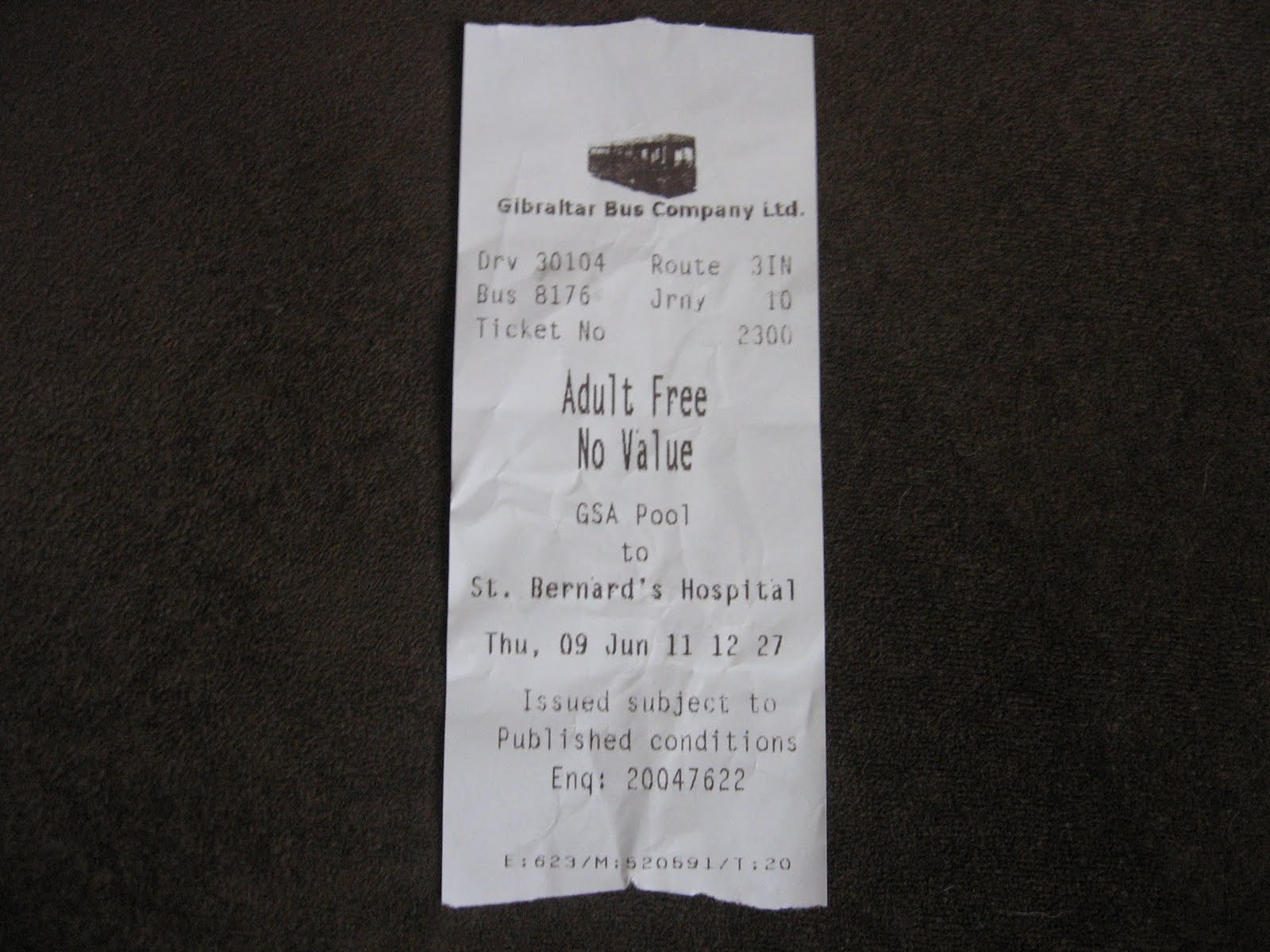
Get on the bus, Gus - in Gib

Today I got on the bus. Haven't been on the bus for ages because normally I walk around everywhere in Gib.

But guess what? at the last Bank Holiday weekend (end of May) it was all change on the buses in Gib.

New routes, new numbers - and - free. Yes, that's right. Free. With the exception of the bus that travels between the frontier and town, the buses in town are now free.


And for months now, we have been watching the installation of rather nice new bus stops. Just as well, one of our local ones had so many holes in the side there wasn't much point standing 'inside' in the wind or the rain.

Out with the old ...


... And in with the new


Well, it was always a busy bus route from Morrisons back home and today it hadn't changed. Totally full. Took even longer sitting around in Market Place for no obvious reason. Still, free is good.

Quick summary of new bus routes and a link below to the official poster:

New bus routes

Route 1
Starts at Market Place, goes along Queensway via Reclamation Road, past Trafalgar and up the back to the Moorish Castle. Back down a similar route via Waterport.

Route 2
Market Place via Line Wall to Europa Point and back via South Barracks Road and Rosia Road.

Route 3
Market Place via Line Wall to South Barracks Road. This is basically half of the old number four route, it just no longer goes to the eastern side.

Route 4
Does go up the east side. Europort, then Devils Tower Road, to Sir Herbert Miles, ie just before the re-opened tunnel.

Route 5
Goes from the frontier, via Market Place, to Reclamation Road, and back again. This service is to PAY.

What happens if you go to Morrisons? Virtually every bus service stops there - only one that doesn't is number 2.

The price used to be cheap, 60p single, so being free doesn't make that much difference if you don't use it much. The new single price on the number 5 frontier Market Place service has shot up to £1.

So why do we have free bus services? Well because it encourages people to use public transport and not their cars in a small congested area? How about because we have a general election this year? Free bus services were mentioned in the manifesto four years ago by the GDP. It's taken until now to implement them. That's probably because the GDP thinks people wouldn't remember freebies if they were implemented earlier. They are probably right.

The general election is probably also why we have all these lovely new health parks and kiddy playgrounds and .. and .. and .. the sudden flurry of activity at Europa Point with the new beautification project ie tourist attractions. There maybe more that I haven't notice.

Or am I just being cynical?

Still, the free bus service was nice today when I had a bad knee and heavy shopping. Otherwise I would have walked. Bad knee, heavy shopping and all. Hardly contributing to less car use in Gib am I? I never use a car in Gib anyway.

And, if the idea is to reduce vehicle use in Gib, and ease parking - why charge on the frontier route? Because won't that encourage people to continue driving into Gib? And continuing to clog up the car parks? Until the free parking changes? And it ain't free any more and charges are introduced?

Monday, June 06, 2011

Cooking with legumes/pulses. Two dals

Dried peas and beans are not part of the UK staple diet.

About the only thing that comes remotely near that is mushy peas. Invariably Batchelors with those two strange round tablets to chuck in the soaking water overnight.

We had mushy peas with fish and chips, and we had pea and ham soup. I didn't like the nasty salty ham and I guess by the time you had added the tablets to the peas it was even saltier.

A bit later my mother discovered lentils and made lots of lentil soup. That was ok. But otherwise - pulses? They are for poor people aren't they?

So when I first decided to cut out meat from my diet, I needed to get that most important protein. After all, westerners can't live without huge amounts of protein can they? I bought a Rose Elliott cookbook which was the basis of my pulse cooking for ages.

We also bought a pressure cooker. These are obligatory in every home in Spain. Every household has one to my knowledge, because, guess what? Garbanzos (chick peas), lentejas (lentils), and alubia (any sort of other bean!) are standard fare for the main meal of the day.

Not only that, but Spaniards will cheerfully describe their meal of lentils or garbanzos or beans as 'muy rico' - delicious. And then go into raptures about it and how and what everyone exactly puts in to make it so delicious.

The only time I have ever heard anyone waxing lyrically in the UK about pea and ham soup has been when there has been far more ham than peas in the soup.

But where I live in Spain, while it's not very poor area, it's not a rich one either. Many people make their living from the land, and we all try and eat cheaply. Pulses are filling, nutritional and - tasty.

There is not the same obsession with meat that I saw in the UK. Yesterday I stood in the supermarket in Gib and looked at the stuff bought by the guy behind me. Nearly £11 on two rather puny pieces of prime sirloin steak. My god!! I ring my hands when I pay £4 something for a pack of seitan and consider it a luxury. And next, he put down two even tinier pieces of salmon fillet for £5. They didn't even look worth buying they were so miniscule.

How many bags of different pulses could I buy from my local shop for that sort of money? And how many meals could I make? Lots is the answer.

I've mentioned the Spanish use of chick peas, lentils and beans, and because they use them so often, they are never stale or hard. I am equally lucky here in Gib with a couple of Indian shops which have every pulse and spice under the sun, more or less.

I decided it was time to embark on some of the promising recipes in my fave Indian cookbook - Julie Sahni's Classic Indian Vegetarian Cookery. I bought a whole new load of different goodies to prepare:

Punjabi Five Jewel Creamed Lentils - Panch Ratan Dal


There are five different types of lentil in the recipe and the five spices/seasonings are onion, garlic, coriander, ginger and chillies. Ms Sahni doesn't include fresh chillies in the recipe as it also includes cayenne but at least tells us we can add some if we like a hot taste. We do and I did.

Ingredients

Yellow split peas - or yellow lentils and Indian yellow split peas
Split white gram beans - urad dal
Split yellow mung beans - moong dal
Red lentils - masar dal

Turmeric
Salt
Oil
Onions
Garlic
Ginger
Tomatoes
Green chillies

Spice perfumed butter

Cumin seeds
Cayenne
Paprika
Fresh coriander/cilantro

I've not given quantities but basically, add however many of the pulses in whatever proportion you like for a decent meal. Say anywhere between six and ten ounces in total?

I didn't soak this lot overnight, but I did stick them in the pressure cooker. Next time I would probably soak them for an hour or two and cook normally to retain better texture.

Wash the pulses and cook them with the turmeric. When nearly finished add salt. (This is why I don't understand the marrowfat peas thing with sodium bicarb tablets - in this and other Indian recipes the salt goes in near the end of the cooking).

Cook onions, garlic, ginger, chillies and toms in frying pan and then add to dal.

For the spice perfumed butter - cook cumin seeds in oil and then add cayenne and paprika. Add to dal and stir slightly. Sprinkle with fresh coriander and serve.

And yesterday I tried:

White Gram Beans Laced with Onion Butter

White gram beans - 7oz approx
Cardamom pods - 2 black or 4 green
Bay leaves (2)
Turmeric
Salt
(Soya) milk
Water

(half and half milk/water)

Wash, and soak gram beans. Book said for two hours so I soaked for one in boiling water. Worked perfectly well.

Cook with above ingredients for around an hour, or until ready.

Spice perfumed butter

Oil
Onion - 1
Garlic
Ginger
Cloves
Garam masala
Black peppercorns - cracked.

OK. I missed out the cloves. Eight seemed vastly excessive and I have a garam masala with lots of cloves in anyway.

Otherwise, fry onion, add garlic, ginger (and cloves), then when ready add garam masala and cracked peppercorns to sizzle for a few seconds, and pour over dal.


I served it with basmati rice and:

Fragrant Tomato-Onion Sauce

Oil
Black mustard seeds
Asafoetida
Cayenne
Onions
Tomatoes
Green chillies
Salt

Add mustard seeds to hot oil. Put lid on pan as the seeds spatter. When they have calmed down, add asafoetida and cayenne. Then add the onions, and stir until they are wilted. Add remaining ingredients and cook on low heat until of suitably saucy consistency. Turn off heat and let rest for half an hour. Apparently it keeps well in the fridge for a day. Not here it doesn't - never got anywhere near the fridge.

Worked out great for breakfast too.


Top tips

If you do decide you want to eat more pulses - for whatever reason - do buy a pressure cooker, and buy dried pulses, preferably from a shop that has a quick turnover.

Buying beans in cans and jars means you will often have additives. Dried ones don't.

Adding dill to beans eg white haricot beans or butter beans aids in cooking and digestibility. And tastes nice too.

Sunday, June 05, 2011

Another first

I've got a couple of friends to thank for this post. The first sent me the cache info in an email to my mobile when it came up as a new cache and I had no internet access, and the second was chatting this morning about caches and blogs - which reminded me I hadn't posted this up.

So there I was, idly lying on the bed as usual flicking through emails and using up too much saldo, when the geocaching newsletter came up with a new cache about 20kms from us. Hey! Could be another first to find.

We left it for a couple of days but decided to go for it on the Sunday. If someone else had found it first, well, no matter. Our fault for hanging around.

The trouble with just getting the info over an email is - you don't get the little map thing or driving directions, so you have to guess how to get there. Especially difficult when there is nothing remotely resembling an OS map in Spain.

But, we had a river as something to aim for, so off we went. It didn't help that there was no GPS signal all the way there. We crossed what look like 'the' river - no name on the bridge - and then couldn't turn right. We ended up doing a merry few miles detour to come back on ourselves.

Once off the main road it wasn't too difficult to keep heading towards the river. GPS still not working. We found a nice dead end street, parked up and got out to see if it would finally find some satellites.

Partner walked to the end of the street and spotted the viaduct. This was one of the other features mentioned that was near the cache. It's a viaduct we regularly travel over that invariably makes me feel nauseous. On bad vertigo days I can't even look out of the window as we go across. It looked even worse from the ground up.


We set off down the track which wasn't particularly impressive as it seemed to be an unofficial council rubbish dump. In fact a council truck came down, reversed round and sat there happily doing nothing. Once past the rubbish we traipsed uphill and came upon a strange building - and - more rubbish.

This is not the sort of place people hide caches. Caches, for the most part are hidden in nice scenic places. And the ones who had hidden this one, had also hidden two extremely other good ones elsewhere in beautiful locations. Not rubbish dumps.

We gazed down at the river, which by now was well below us. I looked at the GPS. 'It's over there.' I said. 'On the other side of the river.' I was NOT scrambling down the sheer river bank which was more like a cliff.

'We'll just walk down the road to where we can get down to the river and then walk up the bed,' he said. Yeah. Right. Heard these bright ideas before. I was busy practicing saying 'You just go and do it yourself darling while I wait in the Landy' when I heard some strange grunts.

He was rolling over and over on the pavement in a little ball, grunting away. While I had been busy walking in the middle of the road (in the shade) looking at the GPS, he had sensibly been walking on the pavement. This is not a regular occurence, it is invariably the other way round. Being unused to pavements he had completely missed a ginormous hole that previously homed a rather large tree. He tripped over the edging, fell down the hole, rolled out and over onto the pavement.

I panicked and thought we should go home. Rubbish dumps and injuries weren't good omens. He got annoyed. 'I've nearly broken an arm and a leg to try and find this cache. We'll find it.'

But we agreed to drive to the other side of the river. A long walk is fine, but not through boring houses and streets. And of course when we arrived, it was a perfect cache spot. Parking, picnic tables, pretty riverside scenery, no rubbish dumps.


We (he) found it pretty quickly. As I took photos up and down the river, I noticed there was a track down from the high bank on the other side. Oh well. It was prettier on the cache side.

And we could never have walked up the river bed - ie never have climbed up the waterfall!!


And a couple of mobile pix - sorry - of a lovely cache up at Alcaidesa. Well worth a trip for anyone who comes down to the Gib area.


Thursday, June 02, 2011

Royal Gun Salute - 2 June 2011 - Gibraltar

Today we wandered down to the dockyard to watch the 21 gun salute for the accession to the throne of HM Queen Elizabeth II.

It's easy, living in a place like Gib, to get blasé about these sort of events. It's five or ten minutes walk away from us, the dockyard is a spectacular setting, tickets are free, and the Governor of Gibraltar did the honours today. It's not the only salute, there are also the royal birthdays and maybe a few others, so if you miss one there is always another one to watch in a few months' time.

Sir Adrian Johns, Governor of Gibraltar


Free tickets


This was the first time Partner had attended, he's always been working before. Like me, the first time I attended a royal salute, and like someone I spoke to back then, he was surprised how few people were there. The salute today was fired by Headquarter Company (Thomson’s Battery) of the Royal Gibraltar Regiment.

Stepping out before the guns are fired


No 1 gun firing


But nevertheless it was a good event. A few of the great and the good (?) of Gibraltar got front row treatment and the rest of us stood up to watch. I was mildly impressed with our Governor, Sir Adrian Johns, who seemed to take a lot of time speaking to all the members of the Gibraltar Regiment taking part in the ceremony. Not just a handshake, but a little bit more of a chat.

And when everything had finished, he thanked the members of the GibReg for taking part and marking the accession to the throne. Nice touch Sir Adrian. Score high on the PR-ometer from me.

All lined up


No more chat for now

Sunday, May 08, 2011

Cycling in Spain - and stuff ....

Living in a mild climate next to the sunny Mediterranean, cycling is a year-round activity.

At weekends the clubs are out dashing up and down the coast road for miles and miles. During the week, people with time off, or the idle not-so-rich like us, get to go out in their ones, twos or threes.

Chillin' (and cyclin')


It's more than five, or six or seven, or something, years since we started cycling - again. When I say again, I mean Partner, as my cycling in my youth was limited to round and round the garden and up and down the drive. With the exception of university - where I cycled part-way around Sefton Park, and Amsterdam when I nearly ended up in the canal due to a lack of skill with back-peddling in order to brake - my road cycling has been zilch. Oh, there was the tandem with Partner, but most of that was done on an old railway line along the east coast in the UK.

Here is the link to the start of the torture machines entering my life.

The bikes rescued from the skip were perfect and we cycled happily along tracks and I graduated to the road. We cycled further and further in each direction.

One day I was struggling back home and a road cycling group whizzed past. 'Venga con nosotros!' they said - 'Come with us!'

'Ojala,' I said wearily. 'If only.'

But months and months and years and years brought results, and one day we set off for a town 20 or so kms up the coast. Flat tyre within the first few kms. Partner pumped it up and I cycled like mad until it went down again. We did this about three times until we got to the first town where we could either buy a new inner tube or fix the existing one and check it with water. Can't remember now - I just remember cycling like mad to get to town!!

Well, lo and behold, further up the coast - there was another puncture. When we got to our destination - yes, yet another one. We had stopped for a drink at a bar so went back to ask for some water to fix the third puncture. Once sorted, we sat and ate our cheap-skate sandwiches brought from home while looking at the sea.

I should say that a group of cyclists had offered to help when we (aka him) were sorting the puncture. We said no thanks. This was the incredibly famous Sean Kelly and some members of an Irish cycling club (Banbridge? - it began with B anyway) who were staying in the area and taking blind people out on tandems.

Now, pay attention. Because although we shot past them as they cruised idly down the non-cycling promenade - they overtook us on the road. But!! We beat them!! Yes, we beat Sean Kelly and clubmates back into town :) But only because we knew the short cuts. Still, I need to say that, because it has to be one of my most famous cycling achievements ever.

In fact, as you do, I was looking things up on the internet today, and it seems you can go cycling with Sean Kelly in Majorca for lots of euros. I don't think so. Because after we joined up again and had a laugh about us beating them, we cycled happily down the promenade together. Cyclists can be nice people with no side. Even when they are world famous.

Which brings me to last week. The cycling is not going too good. My pal Sean would def beat me now. That horrid green slime that Partner insisted on sticking in the tyres to avoid punctures doesn't help. It drags me back, I swear it.

But I bounded personfully on the bike, full of enthusiasm and fitness after my GibGym exercises (no not Gib Gin, that is another story). Off we sailed - or cycled - down the railway track, the going was good - and downhill.

We joined the road. The road is long and endless. My poor little legs struggled to push the wheels round. Nasty bike didn't want to go anywhere. Nasty wheels would not go round. I kept stopping and moaning about the slime.

I checked the brakes weren't sticking. I spun the front wheel. Good as gold. I was about to spin the back wheel ... 'I did all that,' said Really Fit and Fast Cycling Partner Laughing His Arse Off. 'You won't get a puncture with the slime in there.'

I got back on. Reluctantly. Bumpety bumpety bump went the back wheel. I jumped off in a flurry. Looked at the back wheel and it was absolutely rotto. The tyre was totally flat. No puncture with the horrid green slime???????

We weren't far from home. We argued on the side of the road and walked the bikes home.

As the cycle ride had not turned out too well, we climbed in the Landy to go geocaching.

This was a very nice drive. Great directions to the cache - we normally get lost trying to drive to this fortress, and - good co-ordinates. As it clearly wasn't my day, I left the glory of finding the cache to someone else.

He found it!!


The tower


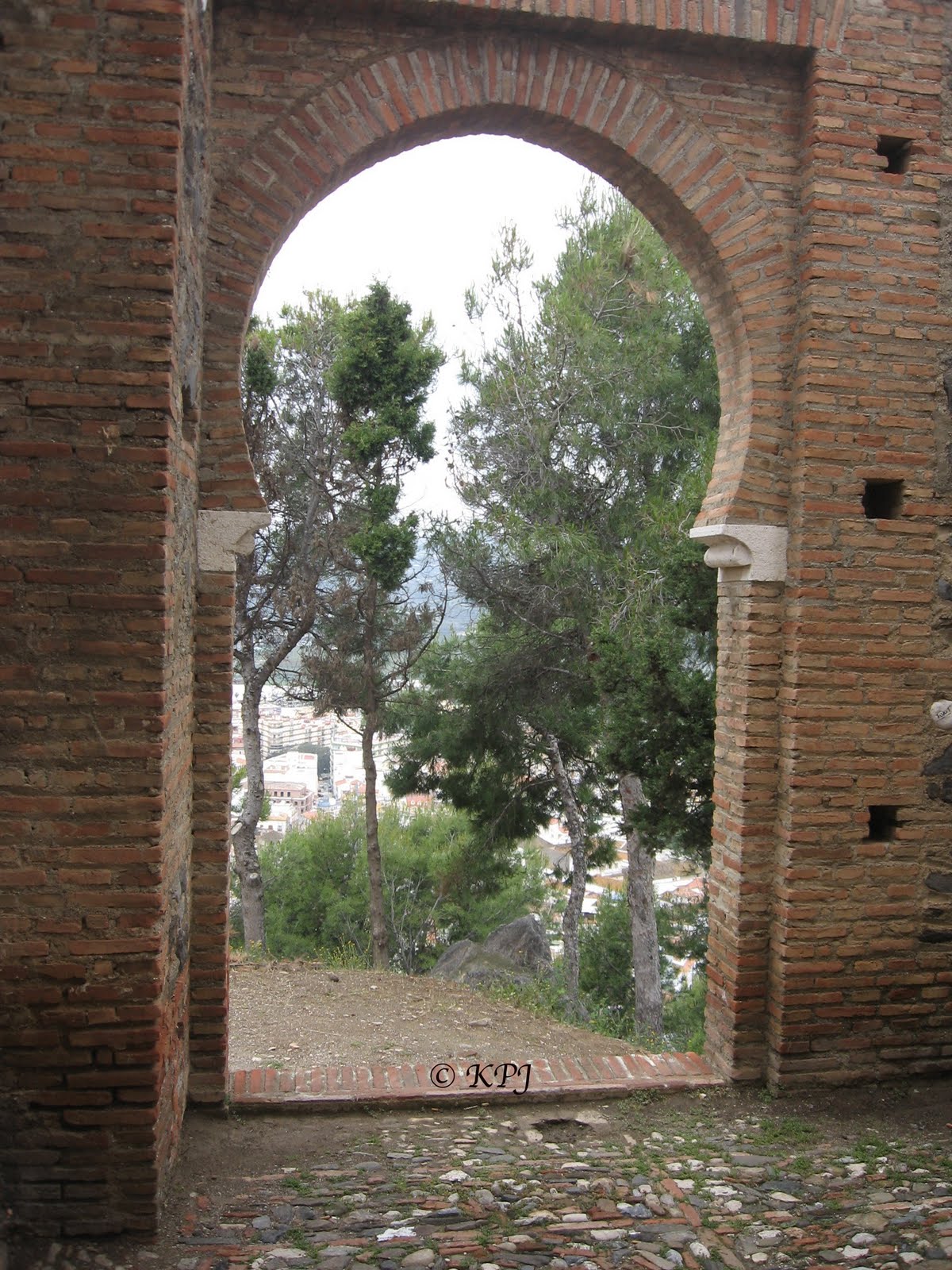
Arabic archway


Approaching La Fortaleza


Then we went to look at the new Holy Week (Semana Santa) museum. It was closed, they were still bringing back all the images - idols? - following the processions over the Easter holiday. Maybe next time. Still, a good cache, and all in all a good morning.

The church of Santa Maria - now home to the Holy Week museum


Might even manage to get rid of that horrid slime out of my tyres soon - it soooo slows me down. And clearly doesn't prevent punctures at all.